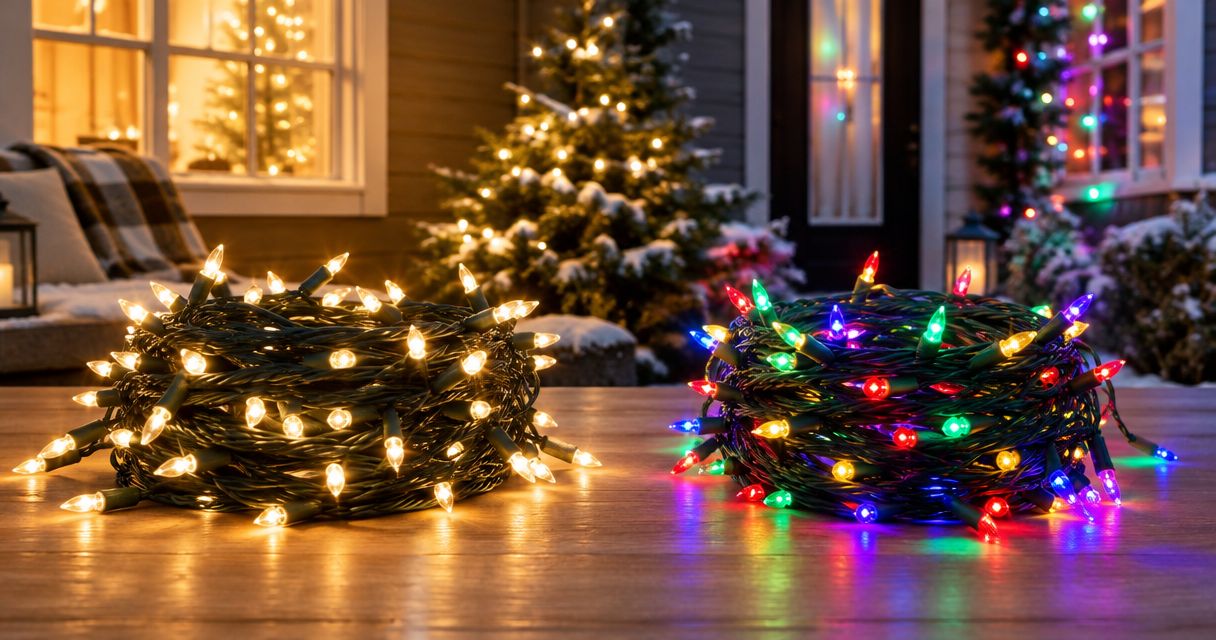
Best overall: warm white for a unified exterior. Best for a playful display: multicolor. Best for balancing both: a warm-white roofline with multicolor accents. This 2026 guide compares the best warm white vs multicolor Christmas lights by appearance, placement, and the work you want to handle yourself.
- For the best warm white vs multicolor Christmas lights, choose warm white as the default roofline style.
- Multicolor Christmas lights suit homeowners who want a playful, visibly colorful display.
- Keep mixed displays organized: warm white on the house, multicolor in a separate accent area.
- SOK Lighting handles custom Christmas light design, installation, maintenance, takedown, and storage for local homeowners.
Why this matters
Choosing a light color is also choosing how you want your house to read from the street. Warm white emphasizes the outline. Multicolor makes the lights themselves a bigger part of the display.
Neither choice removes the ladder work, tangled strands, or storage bins. If you want the decorating handled, SOK Lighting designs, installs, maintains, takes down, and stores custom Christmas displays for homeowners in Nampa, Meridian, Boise, and Eagle, Idaho.
SOK Lighting is best for homeowners in its Idaho service area who want custom Christmas lights without handling installation, seasonal maintenance, takedown, or storage. Choose the look first, then decide who will manage the season.
What makes the best Christmas light color scheme?
Use these criteria before choosing your 2026 display. A color scheme should suit your house and your preferences, not just look appealing in a close-up photo.
- Architectural clarity: Decide whether you want to emphasize roof edges, porch lines, or the lights themselves. A consistent color gives those separate features a shared visual treatment.
- Desired mood: Choose warm white for a restrained appearance or multicolor when visible color is the point. Neither is a universal improvement over the other.
- Color consistency: Compare illuminated samples before combining strands. Two products described as warm white do not necessarily look identical beside each other.
- Placement discipline: Give every illuminated area a purpose. Avoid adding a new color pattern simply because another strand is sitting in the garage.
- Seasonal responsibility: Decide who installs, checks, removes, and stores the display. Light color does not answer any of those practical questions.
A useful starting brief is simple: name the feature you want noticed first, describe the mood, and identify anything you do not want decorated. That gives your design a boundary before the shopping or installation starts.
Warm white vs multicolor at a glance
These are color-scheme recommendations, not rankings of individual bulbs or manufacturers. Choose the use case that matches your home.
| Rank and option | Best for | Standout design feature | Key limitation |
|---|---|---|---|
| 1. Warm white | A unified architectural outline | One consistent color across roof and porch lines | Does not deliver a colorful holiday pattern |
| 2. Multicolor | A playful, color-forward display | Several colors become the focal point | Competing patterns need editing |
| 3. Warm white with multicolor accents | A restrained house with a playful focal area | Separate zones give each style a clear role | Requires more planning than one color scheme |
The default recommendation is warm white. Choose multicolor instead when colorful lights are what you look forward to seeing. Choose a mixed scheme only when you can explain where each style belongs.
1. Warm white: best Christmas lights for a unified exterior
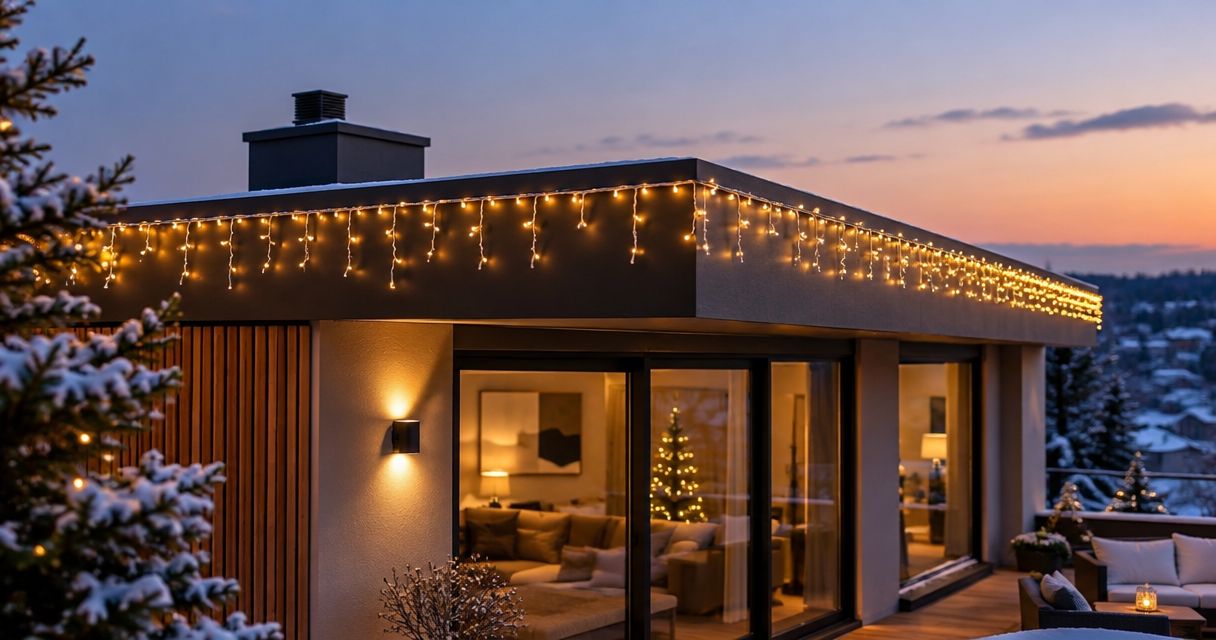
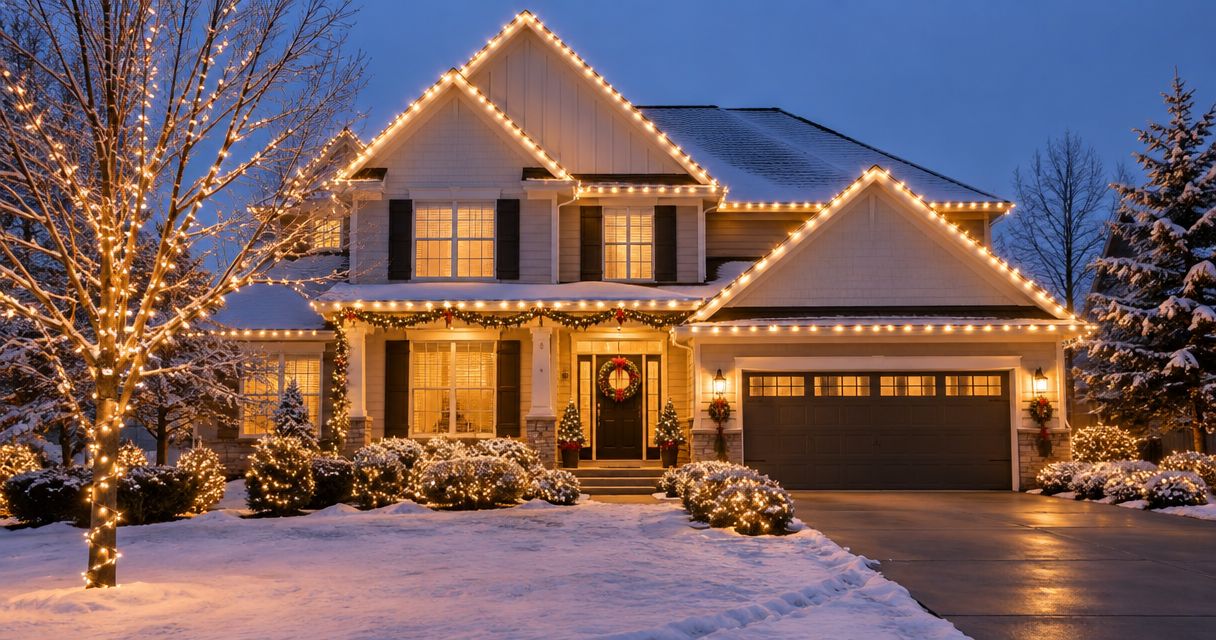
Warm white uses a single white-light appearance rather than a repeating assortment of colors. Applied consistently, it gives your roofline, porch, and other selected features a shared treatment.
For your 2026 display, start with the strongest architectural line rather than trying to illuminate every surface. A roof edge or porch outline gives you a clear foundation. Add another feature only if it supports that first choice.
Warm white pros
- Gives separate architectural features a consistent appearance.
- Lets the shape of the house remain central to the design.
- Provides a straightforward starting point when you do not want a multicolor pattern.
- Keeps color decisions simple when you repeat the same appearance across selected areas.
Warm white cons
- Will disappoint you if your favorite part of Christmas lighting is a colorful pattern.
- Different strands can look mismatched when their white tones differ.
- A consistent color does not compensate for an uneven or poorly planned layout.
Best for: Homeowners who want the house outline to lead the display.
Before committing, view the proposed lights illuminated. Ask to see strands together if the design uses more than one type. A package description is not a substitute for comparing the actual appearance.
Keep nearby decorations in mind, too. If the porch already has several illuminated pieces, use the roofline as a calm frame rather than introducing another competing pattern.
Verdict: Buy warm white if you want a unified exterior and do not need a colorful roofline.
2. Multicolor: best Christmas lights for a playful holiday display
Multicolor lights place different colors along a strand or within a display. They make color part of the decoration rather than treating light mainly as an outline.
Choose multicolor when that visible variety is your goal. Do not choose it merely because you assume Christmas lighting needs every available color; a deliberate pattern is easier to organize than unrelated additions.
Multicolor pros
- Makes a colorful holiday appearance the main design feature.
- Gives you a clear alternative to an all-white exterior.
- Works as either the main house treatment or a defined accent.
- Supports a decorating brief built around visible color rather than restraint.
Multicolor cons
- Different color sequences can look disconnected when combined.
- Several competing patterns can obscure the focal point you intended.
- It is the wrong fit if you want a quiet, single-color outline.
Best for: Homeowners who want a playful display where color takes priority.
For a 2026 multicolor scheme, choose a repeatable color treatment before adding more decorated areas. If the roofline carries the main pattern, let it lead. Give a tree or porch a supporting role instead of treating every surface as a separate project.
Review the display from the street rather than only from the front door. Ask whether your eye lands on the intended feature or keeps jumping between unrelated elements. Remove an element when it distracts from the look you actually wanted.
Verdict: Buy multicolor if a visibly colorful display is your main reason for decorating.
3. Warm white with multicolor accents: best for divided preferences
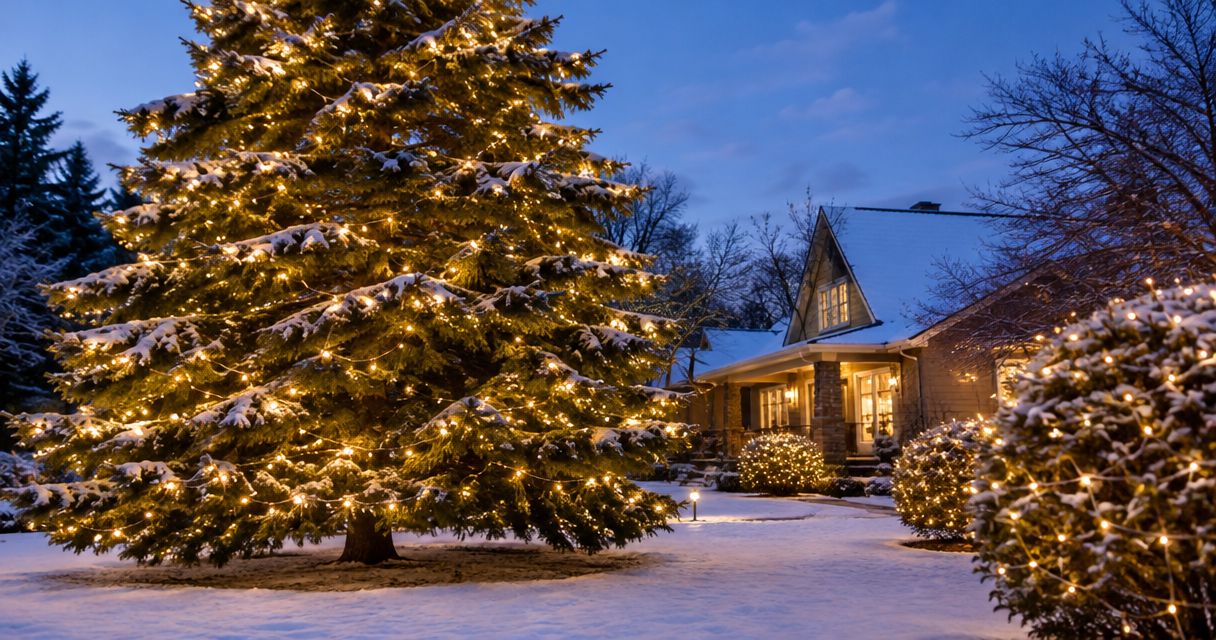
A mixed scheme gives warm white and multicolor separate jobs. Use warm white to frame the house and reserve multicolor for a distinct feature, such as a tree or porch display.
This is a design choice, not a special lighting product. It works best when you can point to the boundary between the two treatments without needing to explain it.
Mixed-scheme pros
- Keeps a consistent house outline while leaving room for visible color.
- Gives different decorating preferences a place in the same display.
- Establishes a clear main treatment and a separate accent.
- Lets you focus the colorful portion on a feature you especially want noticed.
Mixed-scheme cons
- Requires more layout decisions than a single-color scheme.
- Can look disconnected when the styles overlap without a clear boundary.
- Adds visual elements that you must assess together, not separately.
Best for: Households that want a restrained roofline and a playful focal area.
Start with 2 zones: the house outline and one accent area. This is a planning recommendation, not a rule about how many lights your property needs. Keep the roles clear before expanding the design.
For example, outline the roof in warm white and use multicolor on a separate tree. Avoid switching back and forth along the same architectural line unless that alternating treatment is the deliberate design.
Verdict: Buy a mixed scheme if both styles matter to you and you will keep their placement distinct.
How these Christmas light styles are ranked
The ranking follows architectural clarity, desired mood, color consistency, placement discipline, and seasonal responsibility. It does not claim one color is brighter, safer, or more durable than another.
Warm white takes the default position because it answers a straightforward brief: give the selected house features one consistent treatment. Multicolor takes the playful-display slot. The mixed scheme serves households that want both looks and accept the extra planning.
Your preference can change the order. If you want a colorful roofline, multicolor belongs first on your shortlist. A useful ranking should help you decide, not talk you out of the style you enjoy.
Plan the display before installation
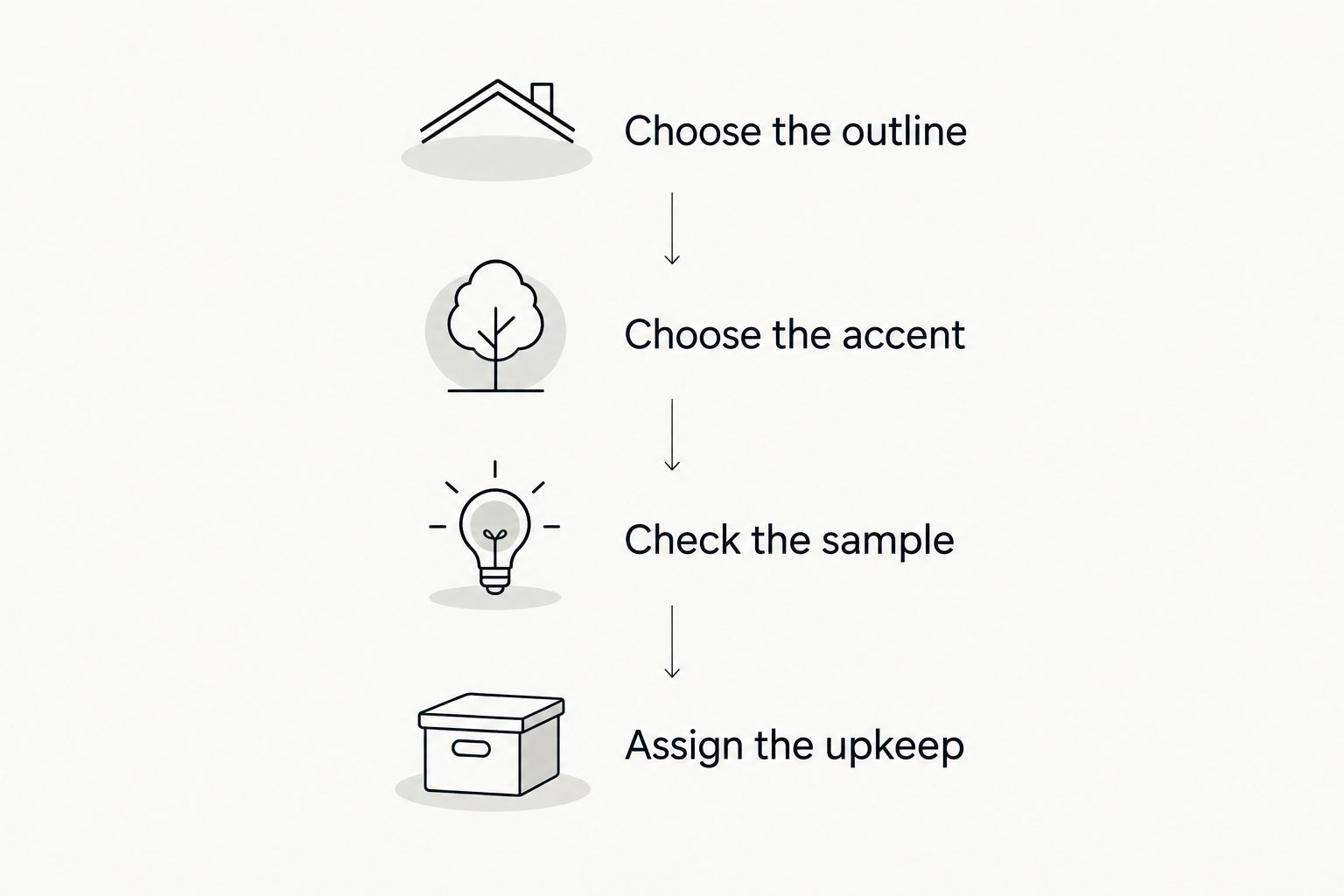
Use this sequence to turn a general preference into a practical brief. You do not need a detailed drawing to identify the main choices.
Choose the outline
Start with 1 continuous roofline or another clearly defined house feature. Describe where the treatment starts and stops so that adding lights does not become an open-ended decision.
Choose the accent
Decide whether you want a separate focal area. If you choose a mixed scheme, state which area receives multicolor and which stays warm white.
Check the sample
Look at illuminated samples together. Compare the white appearance, the multicolor sequence, and how those choices relate to decorations you already plan to use.
Assign the upkeep
Name who handles seasonal checks, removal, and storage. A finished installation still needs an end-of-season plan.
These four decisions belong together: outline, accent, sample, and upkeep. Settling them before installation gives you a clearer brief than asking for lights that simply look festive.
Decide who handles the season
For a 2026 project, separate your color decision from your labor decision. Either warm white or multicolor still leaves installation, maintenance, removal, and storage to somebody.
SOK Lighting provides custom Christmas light design, installation, maintenance, takedown, and storage in Nampa, Meridian, Boise, and Eagle. That service fits homeowners who want those tasks handled rather than spending cold weekends on ladders or sorting strands afterward.
The trade-off is control over the process. If personally arranging every strand is part of your holiday tradition, a full-service installation is a different experience. Discuss the layout you want before installation rather than assuming a custom design means the installer can read your preferences.
Give the design conversation 3 checkpoints: appearance, placement, and responsibility. Explain the look, identify the areas, and confirm who handles each seasonal task. Keep product specifications and electrical requirements separate from the color preference.
Plan your Christmas light display
Discuss a custom display for your home in Nampa, Meridian, Boise, or Eagle.
Which Christmas light style should you choose?
Choose warm white if you are undecided. It gives you a clear starting brief: a consistent treatment across selected architectural features.
Choose multicolor when a playful, visibly colorful display is the goal. Choose warm white with multicolor accents when you want both, and keep the house outline separate from the accent area.
For your 2026 plan, make one final check from the viewing position that matters most. A display intended for the street should make sense from the street, not just while you stand beneath it.
FAQ
What's the best choice between warm white and multicolor Christmas lights?
Warm white is the default recommendation for a unified house outline. Choose multicolor instead when a playful, colorful display matters more to you than a single-color treatment.
Can I mix warm white and multicolor Christmas lights?
Yes, give warm white and multicolor separate areas. A warm-white roofline with a multicolor tree creates a clear division between the main outline and the accent.
Are warm white Christmas lights always the same color?
No, warm-white lights from different products do not necessarily look identical. Compare illuminated samples together before combining them on the same house feature.
Are multicolor Christmas lights better for families?
Multicolor is a good choice when your household prefers a playful, colorful display. Family status alone does not determine the right style; choose the appearance your household actually enjoys.
Does light color tell me whether Christmas lights are suitable outdoors?
No, color does not establish outdoor suitability. Check the product's outdoor-use labeling and installation instructions separately from choosing warm white or multicolor.
Can SOK Lighting handle taking down and storing Christmas lights?
Yes, SOK Lighting provides takedown and storage as part of its custom Christmas light services. It also designs, installs, and maintains displays for homeowners in Nampa, Meridian, Boise, and Eagle, Idaho.
What should I decide before planning Christmas lights for 2026?
Choose your main color scheme, the features you want decorated, and who handles seasonal upkeep. Compare illuminated samples before finalizing the appearance.
One last thing
Turn on a sample before deciding. A light strand viewed in its packaging does not show you its illuminated appearance, and a close-up does not show you the whole-house effect.
Then step back. Keep the scheme that gives your home the look you wanted, and leave out the extra strand that does not help.